Once a tree comes down, you still have a decision to make: what to do with the stump. Homeowners often use grinding and removal interchangeably, but they are two very different jobs with different costs, different results, and different reasons to choose one over the other. Here is how our ISA Certified arborists explain the difference so you can pick what fits your yard and your plans.
What Is Stump Grinding?
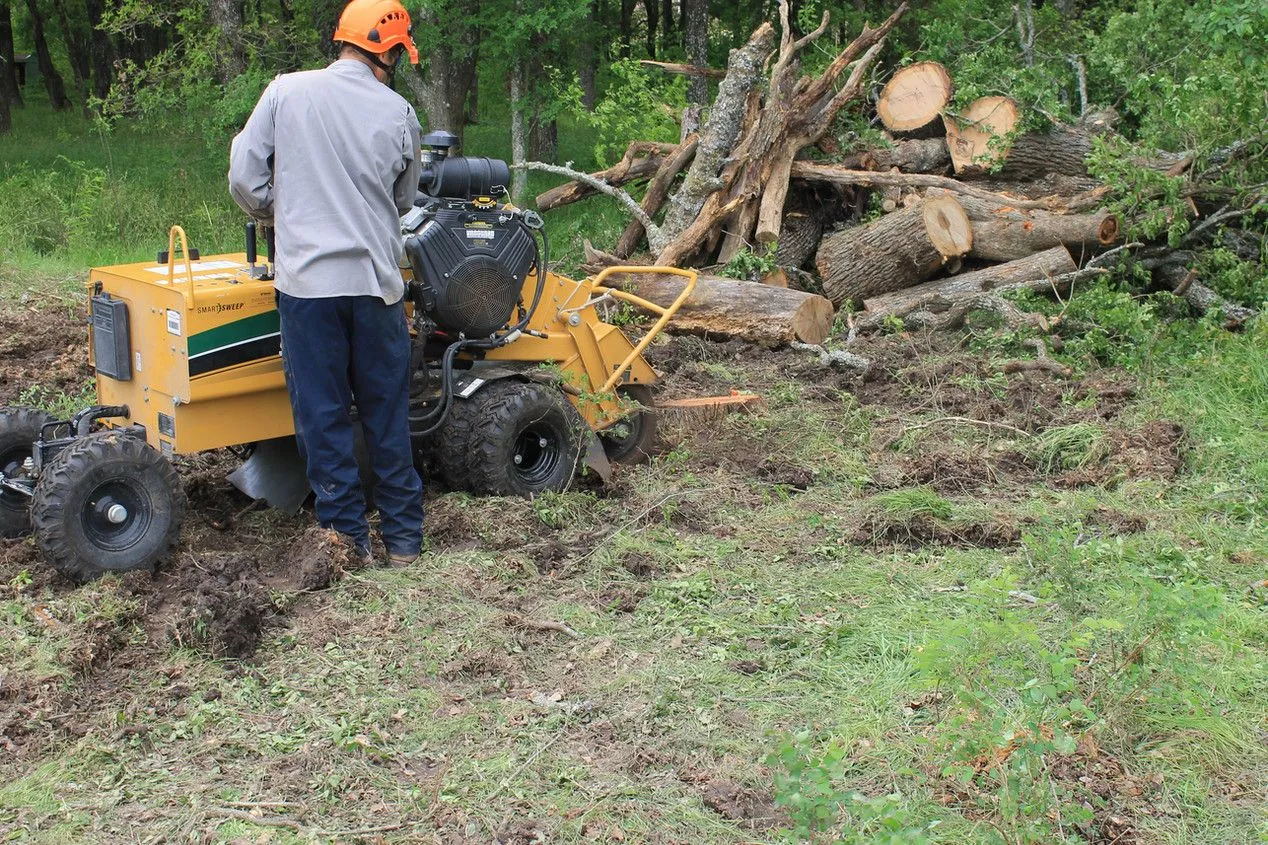
Stump grinding uses a machine with a rotating cutting wheel to chip the stump down into small pieces, typically several inches to a foot or more below the soil surface. What is left is a pile of wood chips and a hole you can backfill with soil. The visible stump disappears, but the main root system stays in the ground and slowly decays over time.
Grinding is the faster, less invasive option. It does not tear up the surrounding lawn the way digging does, and it handles the part of the stump that bothers most people, the part you can see and trip over or hit with a mower.
What Is Full Stump and Root Removal?
Full removal means physically extracting the stump along with the major roots, usually by digging them out. This leaves a much larger hole and disturbs more of the surrounding soil, but it takes out the root mass rather than leaving it to rot underground. It is a more labor-intensive and typically more expensive process because of the excavation involved.
When Grinding Makes Sense
For most homeowners, grinding is the practical choice. It is a good fit when:
- You mainly want the eyesore gone and a level surface back
- You plan to lay sod, seed grass, or spread mulch over the area
- The stump is not directly where a new structure or deep excavation will go
- You want to minimize disruption to the rest of your lawn and beds
After grinding, the leftover chips can be removed or mixed with soil, and the spot can be topped off and planted with grass in short order.
When Full Removal Makes Sense
Full extraction is worth the extra effort in specific situations:
- You are building over the spot, pouring a foundation, or installing something that cannot sit above old roots
- You want to replant a new tree in the exact same location and need clear soil
- The roots are actively causing problems with hardscape or drainage
- You want the entire root system gone rather than left to decompose
What About Regrowth?
This is a common worry, and it depends on the species. Some North Texas trees, especially vigorous species like hackberry, crape myrtle, and certain elms, can send up new sprouts from roots or a stump that was only cut, not treated. Grinding the stump well below grade greatly reduces the chance of regrowth by removing the growing tissue near the surface. If a species is a known sprouter, an arborist may also recommend treating the stump to discourage new shoots. Full root removal is the most thorough way to stop regrowth entirely, since the roots themselves are taken out.
Replanting Over the Spot
Many homeowners want a new tree where the old one stood, and this is where the grinding versus removal choice really matters. After grinding, the ground is full of decomposing wood chips and old roots, which is fine for grass but not ideal for planting a new tree right in the same hole. Wood chips tie up nitrogen as they break down and can leave air pockets. If you intend to replant a tree in the exact location:
- Consider full root removal, or grind extra deep and wide
- Replace the ground-up material with quality topsoil
- Give the site time, or plant the new tree a few feet away from the old center
For a lawn or flower bed, grinding followed by fresh soil is usually all you need.
Which Should You Choose?
If your goal is a clean, level yard and you are planting grass or mulch, grinding is efficient and cost-effective. If you are building, replanting a tree in the same spot, or dealing with aggressive roots, full removal may be the better long-term answer. The clay-heavy soils and tree species common in the DFW metroplex both factor in, which is why an on-site look helps.
Treetop Tree Service has handled stumps of every size across North Texas since 2004. Our ISA Certified, licensed and insured team can walk your yard and recommend the right approach. For a free estimate, call us at 817-992-6670.